Luvometinib Tablets Approved in China 丨A Next-Generation MEK1/2 Inhibitor for Rare MAPK-Driven Tumors
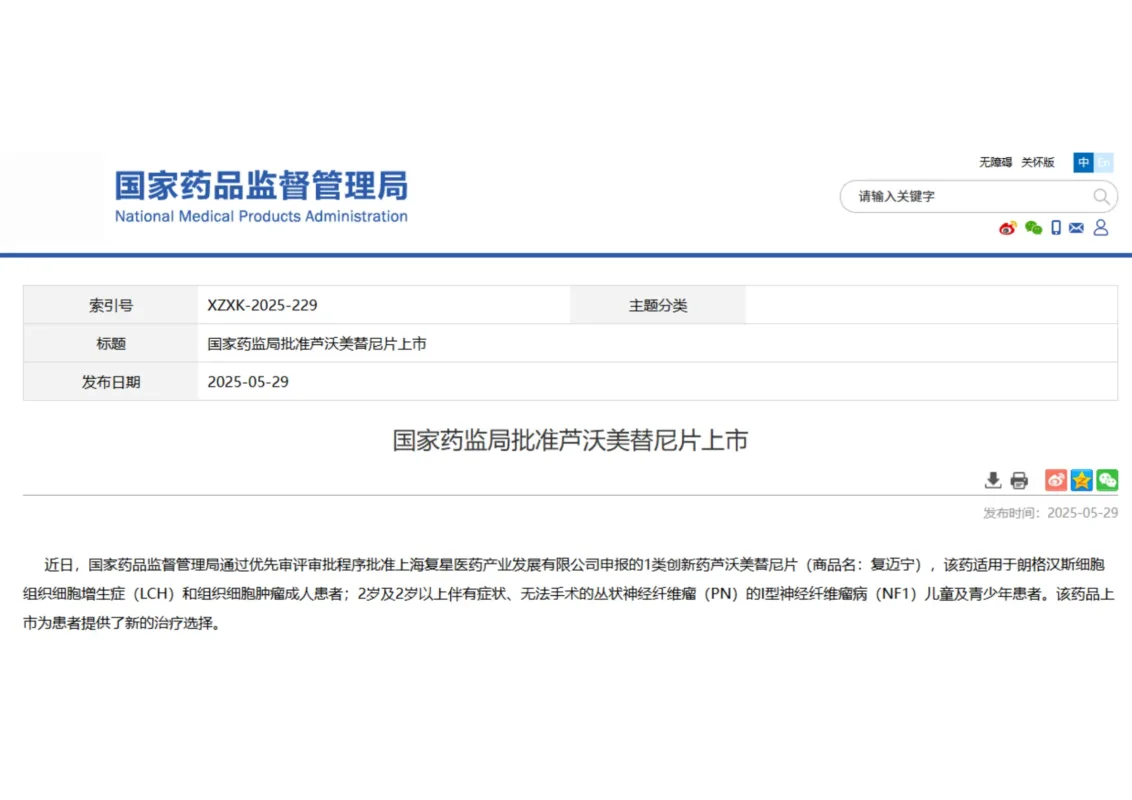
China’s National Medical Products Administration (NMPA) has officially approved Luvometinib Tablets (brand name Fumaining®, development code FCN-159), an innovative Class 1 new drug developed by Shanghai Fosun Pharmaceutical Industrial Development Co., Ltd.
✨ The approval was granted through the priority review pathway, marking a major milestone in the treatment landscape for histiocytic disorders and neurofibromatosis.
✅ Luvometinib Tablets are the first—and currently the only—drug in China approved for adult Langerhans Cell Histiocytosis (LCH) and other histiocytic tumors.
✅ They are also approved for pediatric and adolescent patients with Neurofibromatosis Type 1 (NF1) who have symptomatic, inoperable Plexiform Neurofibromas (PN).
This dual approval makes Luvometinib tablets a groundbreaking therapeutic option for individuals suffering from these rare and difficult-to-treat conditions.
Approved Indications of Luvometinib Tablets
1. Adults with Langerhans Cell Histiocytosis (LCH) or Histiocytic Tumors
LCH is a rare disorder characterized by excessive accumulation of dendritic-like cells, which can infiltrate multiple organs.
Treatment options are limited and often involve chemotherapy or immunosuppressive therapy, both of which come with significant toxicities.
✅ Luvometinib Tablets now provide a targeted oral therapy for adult LCH patients in China, addressing a long-standing unmet clinical need.
2. Pediatric and Adolescent NF1 Patients with Symptomatic, Inoperable Plexiform Neurofibromas
👉 NF1 is a genetic disease affecting nerve sheath development.
👉 PN lesions often grow around critical nerves, major vessels, or airway structures—making surgery risky or impossible.
✅ For children and adolescents aged 2 years and older, Luvometinib Tablets are now an approved systemic therapy that can reduce tumor burden, improve symptoms, and potentially prevent long-term complications.
Scientific and Clinical Significance of Luvometinib Tablets
The MAPK pathway plays a central role in a wide spectrum of tumors and neurological diseases.
🎯 Its abnormal activation—through genetic mutations such as BRAF, KRAS, or NF1—is a hallmark of many difficult-to-treat disorders.
By directly targeting MEK, Fumigating acts at a critical control point in this pathway.
Their development reflects the growing global recognition that targeted MEK inhibitors can benefit patients with:
- Histiocytic disorders
- Neurofibromatosis-related tumors
- Pediatric low-grade gliomas
- Certain vascular malformations
- Other MAPK-driven diseases
Because of their mechanism, Fumaining is anticipated to expand into additional therapeutic areas beyond their current approvals.
Ongoing Clinical Studies: Expanding the Potential of Luvometinib Tablets
Beyond the two approved indications, Fumaining is currently under investigation for several major neurological and tumor-related conditions in China:
1. Neurofibromatosis Type 1 (NF1) in Adults – Phase III
🔬 A randomized, double-blind, placebo-controlled Phase III study is ongoing to evaluate Luvometinib Tablets in adult NF1 patients with symptomatic, inoperable PN.
The trial plans to enroll over 160 participants and will examine efficacy, safety, and long-term tumor control.
2. Pediatric Low-Grade Glioma (pLGG) – Phase II and III
🔬 Several studies led by leading neurological oncology centers aim to determine the role of Luvometinib Tablets in treating pLGG patients with BRAF mutations or KIAA1549-BRAF fusions, key MAPK pathway alterations.
- Phase II results have already shown promising outcomes:
- Objective response rate (ORR): 59.1%
- Disease control rate (DCR): 100%
These results highlight the strong potential of Fumaining as an alternative to conventional chemotherapy.
A Phase III trial is now ongoing, comparing Luvometinib Tablets with carboplatin and vincristine chemotherapy in children aged 2–18.
3. NF2-Related Schwannomas – Phase II
🔬 A single-arm Phase II study is evaluating Luvometinib Tablets for treating NF2-related schwannomas, including vestibular schwannomas.
This condition severely affects hearing and neurological function, and effective medical therapies remain limited.
4. Brain Arteriovenous Malformation (BAVM)—Exploratory Trial
One of the most innovative research directions for Luvometinib Tablets is the treatment of unruptured BAVM.
🔬 Recent genetic studies have revealed that BAVM is driven by MAPK pathway mutations, making MEK inhibitors a promising therapeutic option.
A clinical study is currently enrolling patients to assess whether Luvometinib Tablets can reduce lesion size or prevent progression.
A Breakthrough for Chinese Innovation and Patients Worldwide
The approval of Fumaining marks a significant achievement for China’s biopharmaceutical innovation.
✨Not only does this first-in-class therapy provide new treatment options for patients with LCH and NF1-PN, but it also opens the door to future breakthroughs in neurological and tumor-related diseases.
As ongoing clinical studies continue to expand the applications of Luvometinib Tablets, the drug has the potential to become a foundational therapy for multiple MAPK-driven rare diseases.
🙂 For patients, the launch of Luvometinib Tablets means earlier access to effective treatment, improved quality of life, and—most importantly—renewed hope.
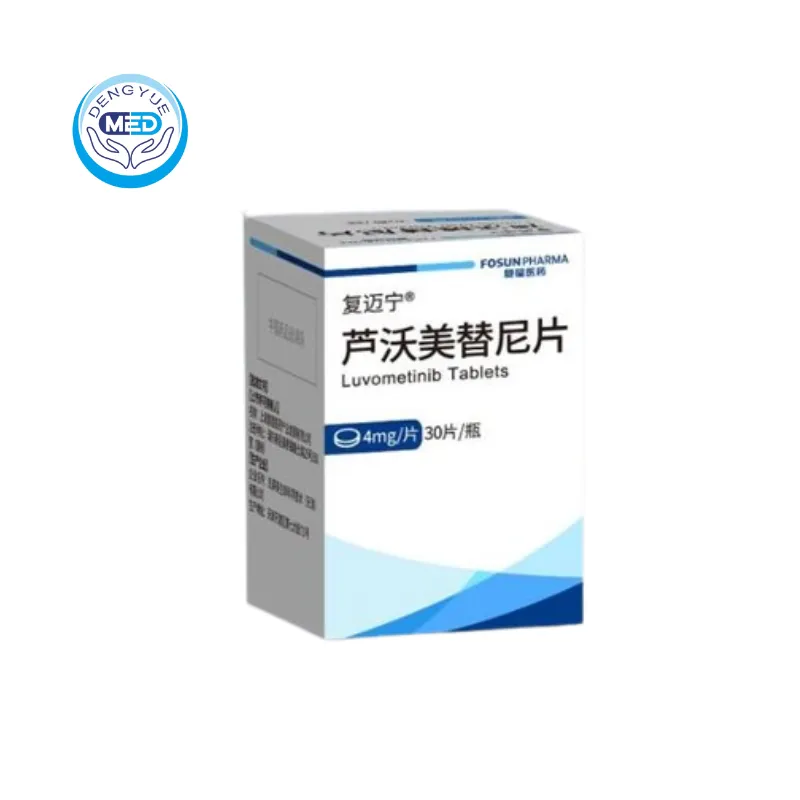
Fumaining (Luvometinib) – NF1-PN | HongKong DengYue Medicine
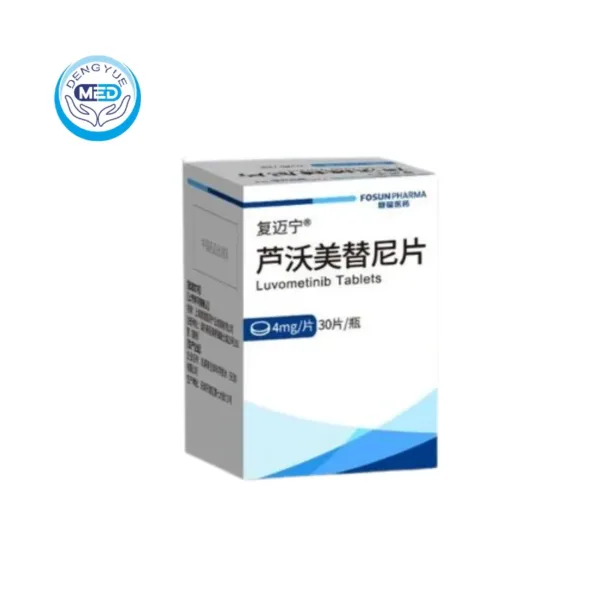
- Generic Name/Brand Name: Luvometinib / Fumaining®
- Indications: NF1-PN
- Dosage Form: Tablet
- Specification: 4 mg × 30 tabs / box
🧑💼 DengYue Medicine will continue to monitor updates on Fumaining and other innovative therapies in the rare disease field.