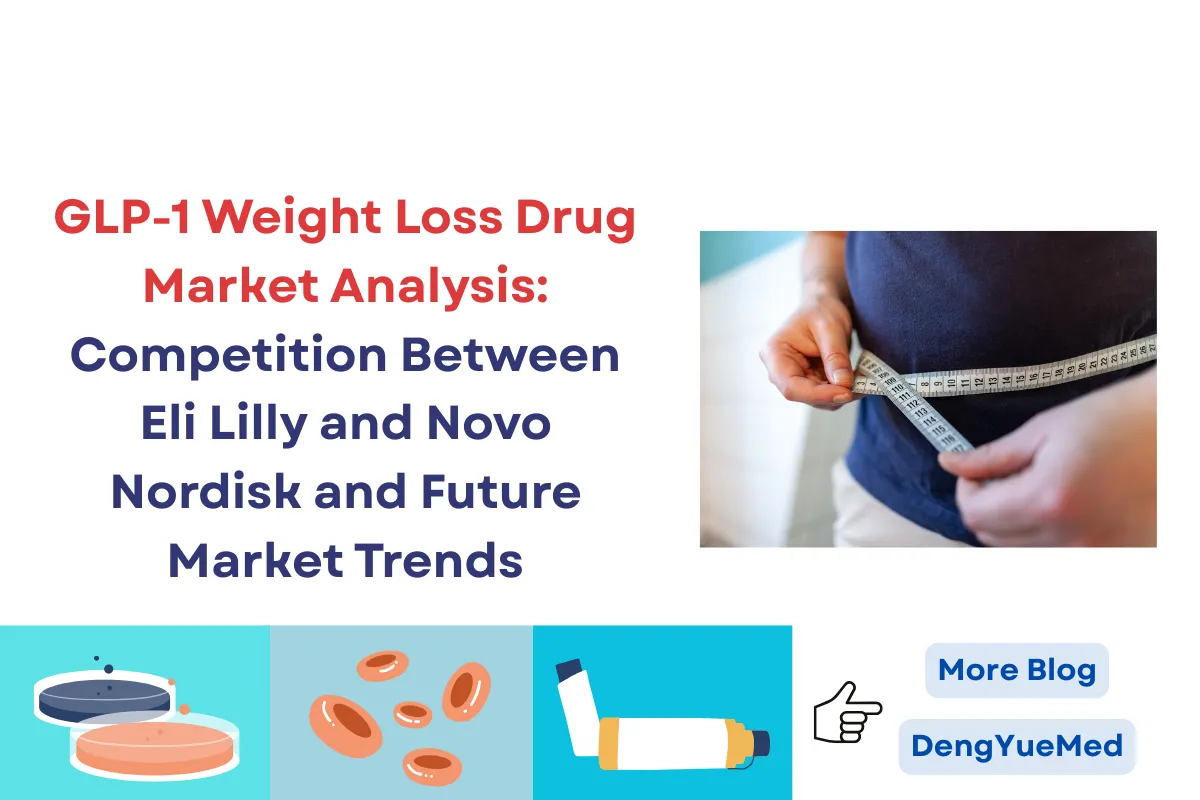
GLP-1 Weight Loss Drug Market Analysis: Competition Between Eli Lilly and Novo Nordisk and Future Market Trends
In recent years, GLP-1 receptor agonists (GLP-1 RAs) have become one of the most closely watched therapeutic areas in the global weight-loss and metabolic disease treatment landscape. From early injectable therapies to today’s innovative oral treatments, GLP-1 drugs are undergoing a major technological and industrial transformation.
With breakthroughs in oral small-molecule GLP-1 drugs, the global weight management market is entering a new phase of competition. The direct rivalry between Eli Lilly and Company and Novo Nordisk is reshaping the market structure, industry supply chain, and long-term development direction of the sector.
From the perspective of GLP-1 weight loss drug market analysis, these developments signal a critical turning point for both pharmaceutical innovation and global drug supply.
Global pharmaceutical distributor DengYueMed analyzes the key changes taking place in the oral GLP-1 weight-loss drug sector from three dimensions: the latest R&D progress, the competitive landscape among pharmaceutical companies, and evolving industry trends.
Oral GLP-1 Drug Development Enters a Rapid Growth Phase
Currently, there are 84 oral small-molecule GLP-1 drug candidates in development worldwide, with 52 already in clinical stages.
These numbers highlight the accelerating investment by pharmaceutical companies in the oral GLP-1 sector as they seek to capture opportunities in the rapidly expanding obesity and metabolic disease markets.
For many years, the GLP-1 drug market was dominated by injectable therapies such as Semaglutide and Tirzepatide. However, injectable medications still face certain limitations in terms of convenience, patient adherence, and large-scale supply.
As a result, oral GLP-1 drugs are widely viewed as the next major breakthrough for expanding the market.
Compared with injectable formulations, oral small-molecule drugs offer several potential advantages: 🔽
- Greater convenience for patients
- Easier scalability in large-scale manufacturing
- More flexibility in cost control
- Higher potential for broader market penetration
Against this backdrop, oral GLP-1 therapies have become a key focus of global pharmaceutical R&D investment. These dynamics are a central topic in ongoing GLP-1 weight loss drug market analysis.
Orforglipron: Eli Lilly’s First Approved Oral Small-Molecule GLP-1 Drug
On April 1, 2026, Eli Lilly and Company announced that its oral small-molecule GLP-1 receptor agonist Orforglipron had received approval from the U.S. Food and Drug Administration for the treatment of adults with obesity or overweight.
✨ This drug became the world’s first approved non-peptide oral small-molecule GLP-1 receptor agonist, marking a major milestone in the transition of the GLP-1 therapeutic field toward small-molecule innovation.
Orforglipron offers several notable characteristics:
- Once-daily oral administration
- No injections required
- Flexible dosing schedule
- No strict restrictions regarding food or water intake
These features provide significant advantages in patient adherence and convenience.
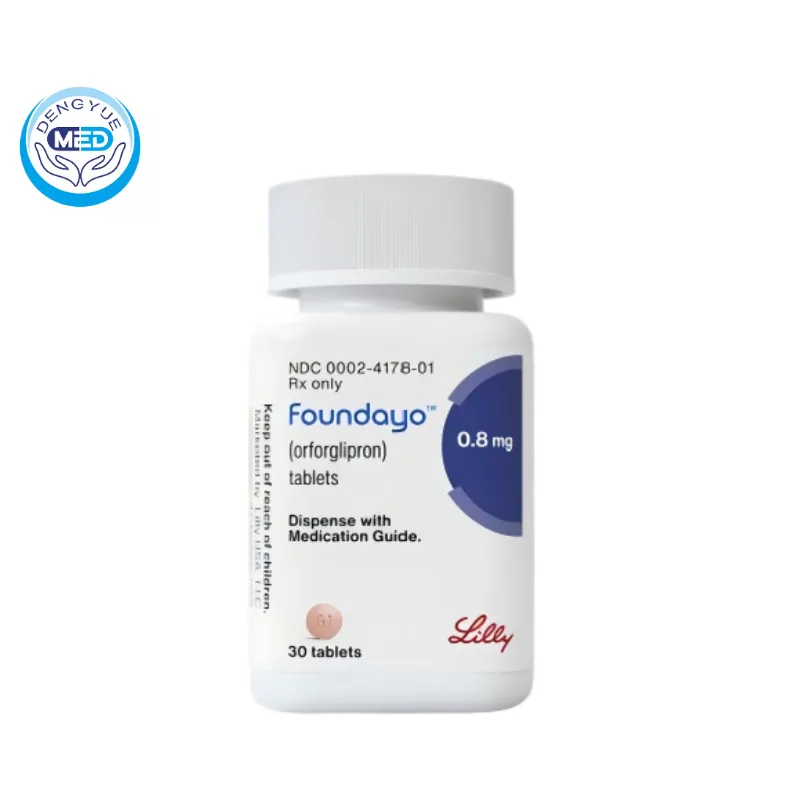
Orforglipron was originally discovered by Chugai Pharmaceutical. In 2018, Eli Lilly and Company acquired the global development rights and subsequently advanced the drug through international clinical trials.
Currently, Lilly has submitted marketing applications for Orforglipron for weight loss or diabetes treatment in more than 40 countries. These developments play an important role in the evolving GLP-1 weight loss drug market analysis, as companies race to expand global access to oral therapies.
Novo Nordisk’s Oral Wegovy Joins the Competition
At the same time, another GLP-1 giant, Novo Nordisk, is accelerating the commercialization of its oral weight-loss therapies.
On December 22, 2025, the U.S. Food and Drug Administration approved an oral formulation of Semaglutide for weight management, allowing it to enter the obesity treatment market.
Subsequently, on January 5, 2026, the product was officially launched in the United States.
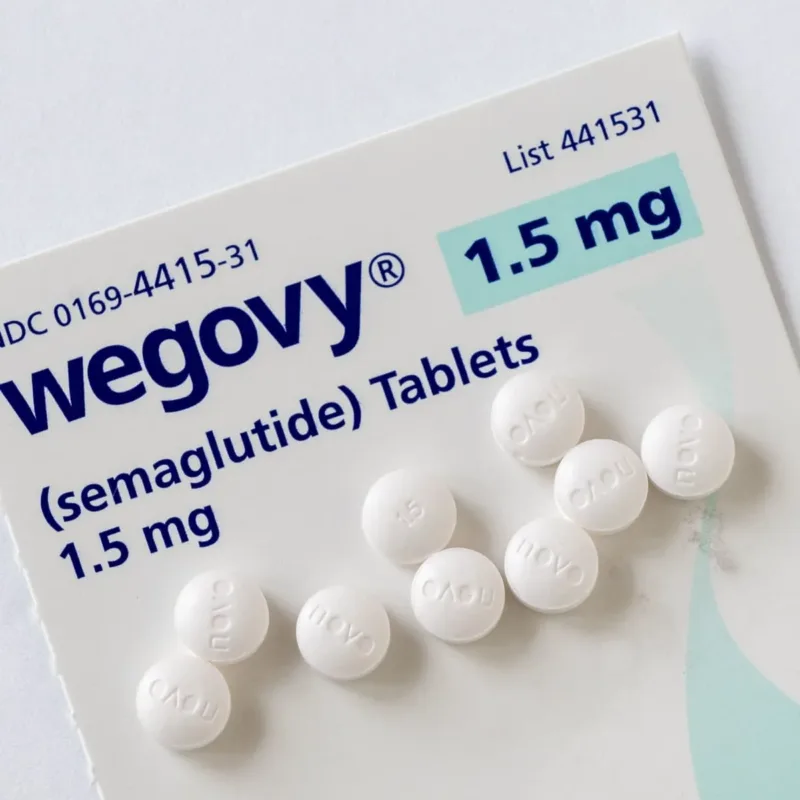
Wegovy is already one of the most influential GLP-1 weight-loss drugs globally. Its active ingredient, semaglutide, has established strong clinical evidence and brand recognition worldwide.
With the introduction of an oral version, Novo Nordisk aims to further strengthen its leadership in the obesity drug market.
👉 However, unlike Orforglipron, oral semaglutide remains a peptide-based GLP-1 therapy, meaning its production process and formulation design remain relatively complex.
For this reason, many industry analysts believe that small-molecule GLP-1 drugs may offer long-term advantages in manufacturing scalability and production costs—an important point highlighted in many GLP-1 weight loss drug market analysis reports.
China’s Market Remains in an Early Stage
Compared with Europe and the United States, the oral GLP-1 weight-loss drug market in China is still in its early development stage.
So far, no oral GLP-1 weight-loss drug has been approved in China. However, multinational pharmaceutical companies have already begun building localized production and supply networks in anticipation of future demand.
On March 11, 2026, Eli Lilly and Company announced plans to invest approximately $3 billion over the next decade to expand its supply chain capacity in China.
The investment will focus on: 🔽
- Building oral solid-dose manufacturing capacity
- Establishing localized supply systems
- Supporting the production and supply of Orforglipron
This project represents one of the largest global manufacturing expansion initiatives in Lilly’s history.
At the same time, Orforglipron has submitted a marketing application to the National Medical Products Administration for the treatment of type 2 diabetes and obesity in China. DengYueMed will continue monitoring and updating developments related to the regulatory review process.
With rising obesity rates and a growing population of metabolic disease patients, China is widely expected to become one of the most important future growth markets for GLP-1 therapies. This perspective is frequently highlighted in forward-looking GLP-1 weight loss drug market analysis.
The Era of Small-Molecule GLP-1 Drugs Is Emerging
The approval of Orforglipron represents more than the launch of a new drug—it signals a fundamental shift in the technological direction of the GLP-1 drug industry.
Over the past decade, GLP-1 therapies have largely relied on peptide-based injectable drugs. However, the emergence of oral small-molecule therapies could reshape the competitive logic of the entire industry.
This transformation may influence the market in three major ways.
1. Changes in Manufacturing Models
Small-molecule drugs are typically produced through chemical synthesis, which is more suitable for large-scale industrial manufacturing.
In contrast, peptide-based drugs involve more complex production processes and higher technical requirements.
2. Improved Supply Capacity
As global demand for weight-loss therapies continues to grow rapidly, manufacturing capacity has become a critical competitive factor.
Small-molecule GLP-1 drugs may offer greater flexibility in scaling production.
3. Higher Market Penetration
Oral medications are generally easier for patients to accept and more suitable for long-term treatment.
This means that GLP-1 therapies may gradually expand from specialist treatment settings to broader chronic disease management markets.
These structural shifts continue to shape the conclusions of many GLP-1 weight loss drug market analysis discussions across the pharmaceutical industry.
Future Market Trends: Competition and Innovation
At present, the GLP-1 weight-loss drug market is still largely dominated by Eli Lilly and Company and Novo Nordisk.
However, breakthroughs in oral small-molecule drugs may significantly reshape the competitive landscape.
In the coming years, several trends are likely to emerge:
- Rapid growth in the number of oral GLP-1 drugs
- Small-molecule GLP-1 therapies becoming a major R&D focus
- Manufacturing capacity becoming a key competitive factor
- Continued entry of emerging biotechnology companies into the sector
At the same time, dual-target GLP-1 drugs, GLP-1/GIP co-agonists, and oral multi-target metabolic therapies are also advancing rapidly.
These innovative therapies are expected to further drive the next growth cycle of the global obesity drug market, a conclusion consistently highlighted in GLP-1 weight loss drug market analysis.
Conclusion
With continuous breakthroughs in oral GLP-1 therapies, the global weight-loss treatment market is entering a new growth cycle.
From injectable therapies to oral small-molecule drugs, the evolution of technology is reshaping industry supply chains, manufacturing models, and competitive dynamics. 🚀
Over the next several years, as more innovative therapies enter clinical development and commercialization, the GLP-1 field is expected to maintain rapid growth while expanding into broader metabolic disease management.
As a global pharmaceutical distributor, DengYueMed focuses on innovative drug supply and cross-border medical services, connecting international pharmaceutical resources and facilitating global access to advanced therapies.
FAQ about GLP-1 Weight Loss Drug Market Analysis
Is there a GLP-1 that is FDA approved for weight loss?
Yes. The U.S. Food and Drug Administration has approved GLP-1–based drugs for weight loss, including Wegovy (semaglutide). More recently, the oral GLP-1 drug Orforglipron developed by Eli Lilly and Company has also been approved for adults with obesity or overweight.
What is the GLP-1 market?
The GLP-1 market refers to the global pharmaceutical market for drugs that target the GLP-1 receptor to treat metabolic diseases such as type 2 diabetes and obesity. Major products include Wegovy, Ozempic, and emerging therapies like Orforglipron, developed by companies such as Novo Nordisk and Eli Lilly and Company.
Who Leads the GLP-1 Weight Loss Drug Market?
The market is currently dominated by two major pharmaceutical companies: Novo Nordisk and Eli Lilly and Company. Their key products, including Wegovy and Orforglipron, are driving growth in the global obesity treatment market.
Oral vs Injectable GLP-1: What’s the Difference?
Oral GLP-1 drugs offer greater convenience because they can be taken as pills rather than injections. Emerging therapies such as Orforglipron may improve patient adherence and enable larger-scale production compared with injectable drugs like Wegovy.